
Why Rental Gear Doesn't Fit You - And Why That Is Not Your Fault


Dive Like You Mean It - Part 2
The questions Indian women ask about gear - and what nobody tells them before they ask.
Developed as part of the Dive Like You Mean It series, shaped by conversations with women who dive across India. With thanks to Nilanjana Biswas (Neilu), SSI Dive Instructor, and Sindhuja Balamurugan and Shweta Thadeshwar for their feedback and encouragement. The gear guidance in this article draws on professional equipment expertise built over years of authorised service and technical training. Any questions, disagreements, or better ideas - contact us directly.
If you have done your first dive - or your first few - there is a good chance something felt off.
Not the diving itself. The diving was probably everything you hoped it would be.
The gear.
The mask that took three clears to stop leaking. The wetsuit that bunched at the shoulders or gapped at the waist. The fins that were half a size too large and left you kicking twice as hard for half the progress. The BCD that rode up every time you tried to hover.
You probably assumed this was part of the learning curve. That you would get better at managing it. That experienced divers just figured out how to make it work.
Here is what nobody told you: the gear was not designed for your body. And no amount of experience fixes equipment that does not fit.
This is not about skill. It is about the fact that every piece of rental equipment in India was designed, sized, and manufactured with one body type in mind - and it is not yours.
This is also a long read. Here is why.
Gear is not a simple conversation. It is one of the most technical subjects in diving - and the honest truth is that genuinely informed guidance on dive equipment is almost non-existent in India unless you happen to be speaking to someone who works with gear professionally, at a high level, every day.
Your instructor is a good starting point. But instructors are trained to teach diving, not to advise on equipment engineering, fit mechanics, or the technical differences between product lines. The people who can give you that guidance - professional equipment technicians with hands-on service experience across multiple brands - are extremely rare in this country. In our experience dealing with technicians and dive professionals across India, even many of those who call themselves equipment specialists are working with incomplete information.
We say this not to be dismissive of anyone - but because you deserve to know that finding truly reliable gear advice in India is genuinely difficult. Even this article is a drop in the ocean of what there is to know. We have had to make choices about what to include, what to simplify, and where to say "contact us" rather than try to compress years of technical knowledge into a paragraph.
But it is a good start. And that is why it is long.
The Hygiene Problem Nobody Talks About

Before the recommendations, something worth knowing.
Every piece of rental equipment you use has been used by someone else. The mask skirt has been pressed against someone else's face. The wetsuit has been on someone else's skin. The regulator mouthpiece has been in someone else's mouth.
In India's tropical climate, rental gear is rinsed inconsistently, stored in humid conditions, and replaced far less frequently than usage warrants. We documented a specific case - a regulator used daily by a commercial dive operation that had not been serviced in over two years. The findings inside were not pleasant. You can read the full case study here.
The regulator is the most extreme example. But the pattern holds across all shared equipment. Owning your gear is not just about fit and performance. It is about knowing what you are putting against your body underwater.
Before the Recommendations: How to Test If a Mask Actually Fits
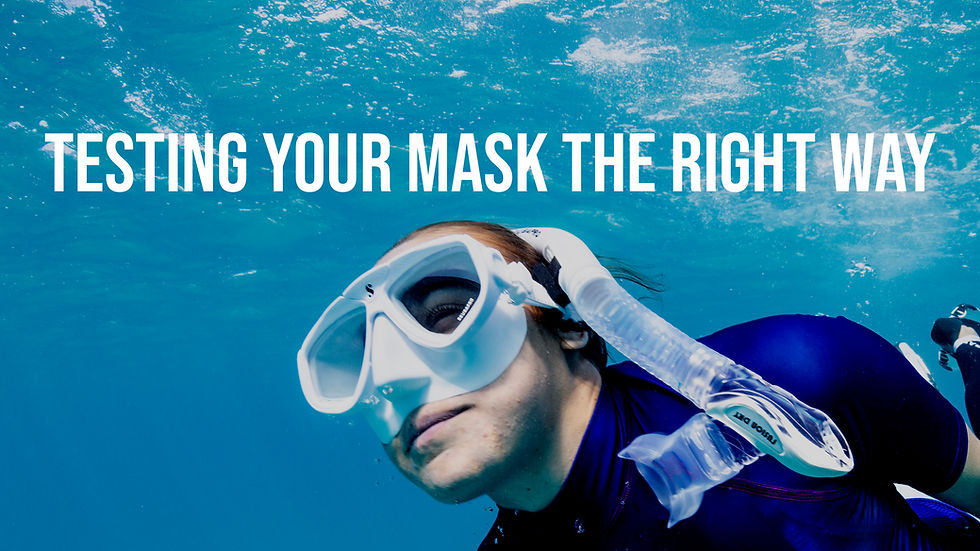
Most people are never shown this before they buy - and it saves you from an expensive mistake.
Clear all hair completely away from your face first. Any strand under the skirt will cause a leak underwater and will compromise this test.
Place the mask against your face without the strap. Breathe in gently through your nose and hold it. The mask should stay on from suction alone. If it slides or air comes in - that mask does not fit your face, regardless of the size label.
Check that no part of the frame or lens presses against your forehead or nose bridge. What is mild on the surface becomes painful at depth.
Check nose pocket access and field of vision. Both are personal. Neither has a right answer.
A mask that passes the breath test but fails comfort or vision is still the wrong mask. Only trying it tells you. When you contact us, we will help you work through the options.
Mask
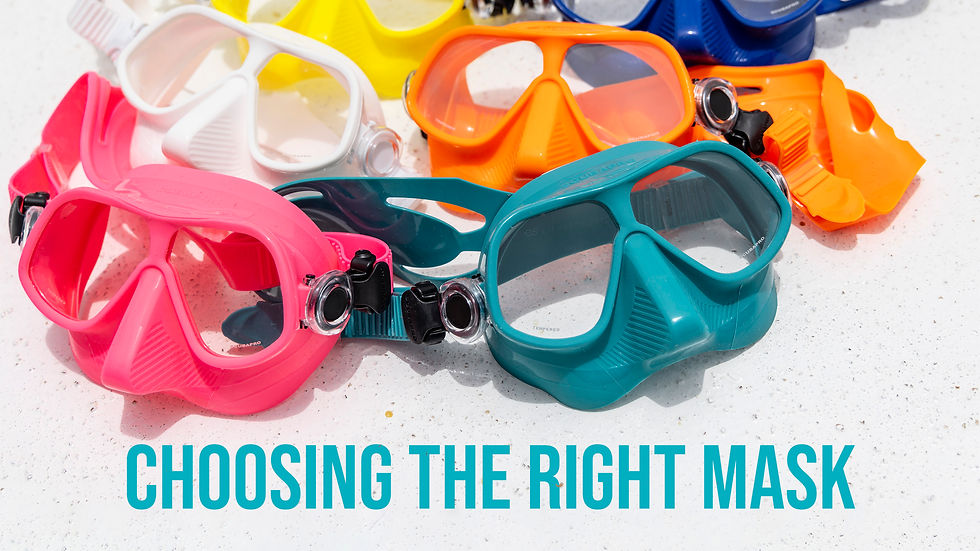
The rental mask is the single most universally uncomfortable piece of gear in any dive shop. It has been on hundreds of faces. The silicone has stretched. The seal is inconsistent. And it was almost certainly designed for a broader, longer face than yours.
A mask that seals on your face correctly means you spend zero time clearing it and all your time looking at things. That transformation happens on the first dive.
My recommendation: SCUBAPRO Solo A great balance of comfort, fit, and performance. Known to fit well across a wide range of face types - a reliable first choice before you know your preferences.
Non-frequent diver Start with the Solo. If it does not seal on your face, the Zoom, Trinidad, and Synergy TruFit are the next options. The Trinidad is frameless and sits closer to the face - suits smaller or petite facial features. The Synergy TruFit skirt is engineered to conform to faces that tend to leak in standard silicone skirts. Browse masks on scubapro.in →
Frequent diver Same recommendations. At this frequency, fit matters even more - you are wearing this mask on every dive of every trip. If the Solo has not been sealing reliably, this is the moment to try the Synergy TruFit. A mask that seals perfectly is one less thing your mind is managing underwater.
Professional You already know what works on your face. If you have not yet found a mask that seals reliably across all conditions, the Synergy TruFit is the place to look. The TruFit skirt is engineered specifically for faces that leak in standard silicone skirts.
Fins

Rental fins are stocked for survival, not performance. The cheapest available option, designed to take abuse and keep working - not to transmit your kick efficiently. Incorrect fins cause cramps underwater. Not just discomfort - actual muscle cramping. And cramping underwater is a safety issue when you need to kick hard to hold position or manage current.
Most Indian women have foot sizes between 5 and 7, with a significant number at size 3 to 4. Standard rental fins are almost never available in these sizes. A full-foot fin in the wrong size slips, twists, and wastes every kick.
My recommendation: SCUBAPRO Seawing Nova The best all-round fin in the range. The pivot fin design delivers serious power with exceptional efficiency - one of the most capable fins on the market across any brand.
Non-frequent diver: GO Sport Fin Real propulsion, self-adjusting bungee heel, fits the full range of Indian women's foot sizes with boots. If you prefer no boots, the GO Rental Fin in the Snorkeling Kit works without them - carry-on sized, no checked baggage fees. Trade-off is lower blade power, which is fine for calm recreational diving.
Frequent diver: Seawing Nova or Seawing Nova Gorilla The Nova rewards the leg strength you have built. The Gorilla is stiffer - better for sites with real current. If you want something between the GO Sport and the Nova, the Supernova is the softer-kick alternative.
Professional: Seawing Nova Gorilla or Jet Fin Professionals need power fast. The Gorilla's hydrodynamic design delivers serious power with manageable effort - the best combination in the range for high-frequency diving. The Jet Fin is the final boss. Designed for the US Navy, unchanged for decades, zero comfort concessions. Pure power. If it does not feel like too much when you pick it up - you are exactly the diver it was built for.
Fins also come in colours. If you want a kit that looks like yours - that is a valid reason to choose. We have heard from divers for whom arriving at a site with gear that reflects who they are is part of what makes the sport feel like it belongs to them.
Rashguard and Exposure Protection

A rashguard is not a wetsuit. It does not provide significant thermal protection on its own. What it does is protect your skin from UV radiation on the surface, from jellyfish stings and coral rashes underwater, and from the general abrasion of repeated saltwater exposure across a dive day. It is also the first layer you put on, which makes it the piece that sits directly against your skin for the longest time.
The rental rashguard - if the operation provides one - is shared equipment. It has been on other people's skin. In India's tropical climate, with inconsistent rinsing and humid storage, this is not a hygienic starting point for a dive. Own your rashguard from the start. It is the lowest-cost item on this list and the most personal.
As a layering piece under a 3mm wetsuit, it adds meaningful warmth on multi-dive days - not because it insulates on its own, but because it traps an extra layer of warmed water against your skin and reduces flushing at the wrists and ankles where wetsuits typically seal least well.
My recommendation: SCUBAPRO T-Flex Long Sleeve UPF 50 - Women Made from 85% recycled polyester and 15% elastane. UPF 50 blocks 98% of UV radiation - relevant for surface intervals in Indian sun. High neckline prevents chafing under a BCD harness. Thumbholes make donning a wetsuit easier. Sized from 2XS through XL. This is what we stock.
Non-frequent diver The T-Flex Long Sleeve is sufficient for most holiday diving conditions. Buy it before your first dive and every dive is immediately more hygienic and more comfortable.
Frequent diver Build your layering system:
T-Flex Long Sleeve - the foundation. We stock this.
T-Flex Leggings - full-length UV and sting protection without the thermal commitment of a wetsuit. For Goa and Pondicherry reef dives where fire coral and jellyfish are a reality. Available on pre-order.
T-Flex Short Sleeve - for warmer surface conditions where the long sleeve feels like too much. Available on pre-order.
Professional Add the Everflex Yulex 0.5mm Long Sleeve / Pants to your layering system. Plant-based Yulex foam in a near-skin thickness - thermal insulation without restriction. Available separately so you layer exactly what conditions require. Available on pre-order.
Wetsuit

Wetsuits do not discriminate based on how often you dive. The right wetsuit is decided by one thing: thermal protection. How warm or cold you run. How deep you go. How many dives you do in a day.
Before choosing, read our article on what Indian water actually does to your body: You Are Getting Cold. You Just Don't Know It Yet. It will make this decision clearer.
My recommendation: SCUBAPRO Sports 3mm - Women's A great entry point. Designed specifically for warm water island diving - exactly the conditions of Andaman, Goa, Pondicherry, and Lakshadweep. Made from X-Foam neoprene, the only green neoprene that complies with PAH environmental regulations. The Pure Design Concept uses fewer seams for maximum flexibility, and the triathlon cut uses wider panels across the underarm and back for unrestricted shoulder movement. YKK rear zipper with brass slider for long-term durability. Available in a women's cut, sized XS through XL.
Choose based on your diving:
Goa or Pondicherry, shallow recreational dives - the Sports 3mm is your baseline. Layer a T-Flex rashguard underneath on multi-dive days.
Andaman or Lakshadweep, deeper dives, repetitive days - still the 3mm, but consider stepping up to the Definition 3mm or Everflex Yulex 3mm if you run cold or plan dives beyond 20 metres where thermoclines drop water to 22 to 24°C.
Premium comfort and performance - the Everflex Yulex 3mm or 5mm. Plant-based Yulex natural rubber, compresses less at depth than conventional neoprene which means it continues to insulate where cheaper suits have already given up. Dedicated women's cut in Black/White, sized from 2XS through XL. The suit you buy when you want to feel the difference from the moment you enter the water.
A rental wetsuit cut for a different body shape, degraded from hundreds of previous dives, provides a fraction of the thermal protection its label suggests. Indian surface temperatures of 28 to 30°C feel warm. But your body operates at 37°C - that gap is enough for continuous heat loss from the moment you enter the water. At depth, temperatures regularly drop to 22 to 25°C. Water removes heat approximately 25 times faster than air. Cold stress increases breathing rate by 30 to 50%, increases nitrogen intake, and changes how your body absorbs and off-gasses gas on ascent. This is not a comfort issue. It is a physiological safety issue.
Contact us for sizing. We will match you to what fits your build and your diving profile, not just what is on the shelf.
BCD

A badly fitting BCD feels like constantly adjusting a backpack that never sits right - except you are doing it underwater, with your hands, while trying to watch a reef.
BCDs are generally sold as unisex. That word carries a quiet assumption: unisex almost always means designed for a male body, made available to everyone. A BCD with adjusted strap length is not the same as a BCD designed around female torso geometry and shorter body length. We have written about why the Indian market is still stuck in rental BCDs - and why that is worth questioning: The True Cost of Rental Diving Gear in India.
My recommendation: SCUBAPRO Level BCD A well-balanced first owned BCD. The Body Grip Gel prevents the BCD from shifting or riding up during the dive - the single most common complaint from women using unisex rental BCDs. The Torso Flex Zone auto-adjusts to your torso length, and articulated shoulder straps adjust to your body shape rather than assuming a fixed geometry. Sized from XS, with height guidance starting from 152cm - covering a range that most rental racks never reach. A genuine improvement over rental in every way that matters.
Non-frequent diver Rent the BCD at this frequency. The economics do not support ownership yet. But notice how it fits - whether it rides up, whether the tank shifts, whether you spend the dive managing your position rather than looking at the reef. That awareness will inform your decision when the time comes.
Frequent diver At this level, you need a BCD built for travel. Domestic flights to Andaman and Lakshadweep make bulk and weight a real cost - and you will be packing and unpacking this across multiple trips a year.
SCUBAPRO Hydros Pro 2 - built on the award-winning Hydros Pro legacy with next-level travel features. The Ergo-Lite lightweight backpack keeps weight down without compromising structure. The monorail weight system integrates your weights cleanly and releases quickly. The quick-dry bladder and modular design mean it packs compactly and dries fast between dive days. XS through XL sizing. Available on pre-order - contact us.
If fit has been a persistent issue and you want women's-specific geometry - the SCUBAPRO Bella BCD is built from the ground up for female torso proportions. We do not stock it in India currently, but it is available on pre-order. Contact us.
Professional At professional level, the question is not whether to own a BCD - it is which one is right for how you dive.
Lightweight travel-friendliness above all: SCUBAPRO Hydros Core 2.5kg. Smart-Pack folding straps. Torso Flex Zone auto-adjusts to your torso length. Available in dedicated women's sizing: LADY-XS-S, LADY-M, LADY-L with lift capacity adjusted for typical female cylinder configurations. The right answer for the professional who is constantly on domestic flights to Andaman and Lakshadweep and needs a BCD that travels like hand luggage and performs like a serious piece of kit.
More features without compromising travel: SCUBAPRO Hydros Pro 2 All the modularity of the Hydros range with the next-generation Ergo-Lite lightweight backpack, monorail weight system, and quick-dry bladder. More attachment points, more configuration options, same travel-ready design. For the professional who wants the full feature set without adding bulk. Available on pre-order - contact us.
Absolute rugged performance: SCUBAPRO Hydros X The most capable BCD in the Hydros range. Built for divers who push conditions, log high dive counts, and need a BCD that holds up to serious use. Available in dedicated women's sizing. For the professional who does not compromise on performance - and does not need to. Available on pre-order - contact us.
For divers who want a harness system with no body-shape assumptions built in at all - the SCUBAPRO S-Tek is a backplate and wing system, fully adjustable to your measurements. No gender assumptions. No torso length assumptions. Just webbing you configure to your body. Contact us to discuss.
Regulator

The rental regulator mouthpiece has been in someone else's mouth - for hours, across hundreds of dives, by people whose health you know nothing about. When you own your regulator, you control its service history. You know it is clean. You know how it breathes.
Here is something the diving industry rarely says clearly: a better regulator is not for better divers. It is for all divers - and inexperienced divers need it most.
A regulator that breathes effortlessly reduces CO2 buildup, reduces physical exertion, and removes one more thing from your head underwater. That means a smoother dive, better air consumption, and more mental space to focus on what is actually happening around you. The idea that high-end regulators are for advanced divers has it completely backwards.
My recommendation: SCUBAPRO MK2 EVO / S270 A genuine step up from the entry-level R105 pairing. The S270's air-balanced design produces extremely low work of breathing - compact casing, internal aerodynamics, dive/pre-dive switch, and a compact exhaust tee that minimises exhalation effort. CE certified for all diving conditions including cold water. This is the right starting point for any diver who wants to own a regulator they will not need to replace as they progress.
Non-frequent diver Renting is acceptable if the compromises are acceptable to you. But read our regulator negligence case study before your next dive. Know what to ask your dive operator. Know what a properly serviced regulator looks and feels like. Your safety depends on that knowledge even when you are renting.
If you are ready to own, the MK2 EVO / S270 is the right starting point. View on scubapro.in →
Frequent diver At this level, always go for the best you can afford. If budget allows, the MK25 EVO series is the recommendation - unmatched breathing performance, no depth limitations, and air delivery that stays effortless regardless of depth, tank pressure, or breathing rate.
If budget is a consideration, the MK11 EVO / S270 is the honest middle ground. The MK11 EVO's balanced diaphragm design is more compact than its predecessor, four high-flow LP ports maximise airflow, and the S270 second stage delivers smooth breathing performance in all conditions. CE certified for all diving conditions including extreme cold water. A significant step up from entry-level and a regulator you will grow into rather than out of.
Professional You must take the MK25 EVO series. Non-negotiable.
As a professional, you are not just supporting your own breathing - you are supporting your students and divers, sometimes simultaneously. The MK25 EVO's air balanced flow-through piston provides constant and effortless airflow unaffected by depth, tank pressure, or breathing rate. Its flow rate is unmatched - meaning when you share air with a diver in distress, your own breathing performance does not change. Not slightly. Not at all.
We are not making that claim lightly. 135 divers breathed simultaneously from a single MK25 EVO in a Guinness World Record attempt - and it delivered. Watch it here.
The MK25 EVO / A700 is the flagship. The MK25 EVO / S620 Ti reduces work of breathing by 37% over the previous S600 with a full titanium inlet tube and improved exhaust for an effortless breathing experience in all water temperatures.
For professionals who want the absolute top of the range with Black Tech coating for salt and corrosion resistance - the MK25 EVO BT / A700 BT Carbon is the final word in regulator performance.
Contact us for the right MK25 EVO pairing based on how and where you dive.
Dive Computer

A dive computer is not just a dive accessory. It is the instrument that tracks your nitrogen, manages your safety stops, and tells you when you have pushed far enough. Rental computers - where they exist at all - are basic systems for basic diving. You do not know if they have been reset properly between users. You do not know if they have been maintained.
Your safety is your responsibility. Not anybody else's.
Before we get to the recommendations, one thing worth understanding about computers specifically: electronics depreciate fast. If you buy something thinking you will sell it later and upgrade, you will get a fraction of what you paid. Instead of that - invest in something you will not need to replace for years. Something reliable that supports you through your entire diving journey until you step into technical diving.
My recommendation: SCUBAPRO Z1 Solar powered - built by Casio in Japan for SCUBAPRO. Unbeatable quality and construction. The solar charging system means no battery anxiety - ever. The internal battery lasts more than 8 years before needing replacement. You wear it as a wristwatch every day, which means it is already tracking your surface intervals before you reach the dive site. It supports recreational diving through to the point where you are ready to step into technical diving. A computer you buy once and do not think about again.
Non-frequent diver Renting is acceptable. But just remember - rental computers are basic systems calibrated for basic diving. You do not know if they have been properly reset between users or maintained to a reliable standard.
Even as a non-frequent diver, ownership makes a significant difference to your safety. If budget allows, the Aladin ONE Matrix is the honest entry point - simple, reliable, purpose-built for recreational diving. One step up is the Aladin Sport Matrix, which adds multi-gas capability for divers who want room to grow into nitrox diving.
Frequent diver Buy the Z1. It is the right computer for recreational diving and then some. Solar powered, wristwatch format, no charging hassle, no battery surprises at the jetty at 5am. It will support you from your tenth dive to your five-hundredth without asking anything of you except to wear it.
Professional Choose what is right for how you dive. The Z1 remains the right answer for most professionals - simple, everyday use, no charging worries, wear it like any other watch. You do not have to think about it. It just works.
If you are a dive professional moving into technical diving, invest in a computer with gradient factors. The SCUBAPRO G2 TEK is built specifically for this - pure Gradient Factor algorithm (ZHL-16 GF), 120 metre operating depth, full-colour TFT display, multiple dive modes including CCR and sidemount. This is the computer you buy when your diving has moved beyond recreational no-decompression limits and you need a tool that matches where you are going.
Contact us for the right computer pairing based on where you are in your diving journey.
What Women-Specific Gear Actually Means
Women-specific scuba equipment is not about colour or branding. It is about geometry.
A women's BCD is cut for a shorter torso, different shoulder width, adjusted chest strap positioning, and reduced lift capacity calibrated for typical female cylinder configurations. A women's wetsuit has a different torso-to-hip ratio, shorter leg length, and adjusted panel placement. A women's mask is smaller-framed with a lower-volume lens system. Women's rashguards are cut for a women's silhouette and sized from 2XS to account for the full range of Indian women's builds.
SCUBAPRO makes all of this globally. Some of it is available in India now. Some of it we are working to bring in.
We do not currently stock the full SCUBAPRO women's range in India - and we tell you that directly because you deserve to know before you make a trip or place an order. What we do have, and what we can order for you, is expanding. If you are looking for something specific that is not listed on the site, contact us.
Your ask is part of how we decide what comes in next, and we have the option to bring items in on pre-order through our regular shipments.
A Note Before You Go
The reason fit matters is not vanity. It is not about looking a certain way or having the right label.
It is because diving with gear that works for your body is a fundamentally different experience from diving with gear that does not. When your mask does not leak, when your wetsuit actually insulates you, when your BCD holds you horizontal without constant adjustment - you stop managing your equipment and start being present for the dive.
That presence is what makes diving what it is. The silence. The weightlessness. The world that exists below the surface and asks nothing of you except to be there.
You deserve to actually be there for it.
What Comes Next
In Part 3, we go destination-specific:
Where to dive in India as a woman - what the experience actually looks like at Andaman, Goa, and Pondicherry, and what to look for when choosing a dive operation.


Comments